Case Studies
Four Partners, One Visit: BB Energy Foundation in Morocco
BB Energy Foundation August 26, 2026
Hazel Thompson
Earlier this year, BB Energy Foundation’s board travelled to Morocco to spend time with four partner organisations: Amal Foundation and Association Solidarité Féminine (ASF) in and around Casablanca and Marrakech, INSAF in the Al Haouz Province, and Al Ikram. The trip was built around a simple goal — see the programmes in person, meet the people running and taking part in them, and use that time to think through what comes next in each partnership.
Amal Foundation: A Café Where Everyone Learns a Little Sign Language
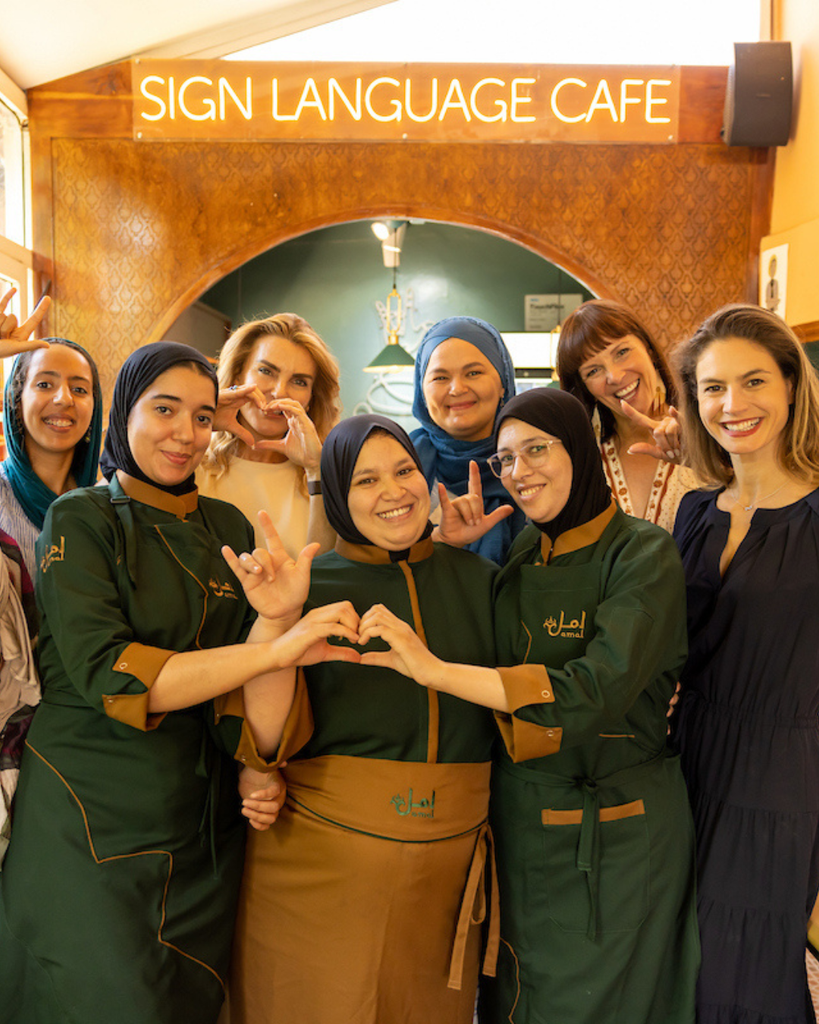
The first stop was the Centre for Language and Culture in Marrakech, home to Amal Foundation’s Sign Language Café. It’s staffed by two Deaf women and one hearing colleague who has learned sign language, a team that has worked together for around eight years. Images of signs are displayed throughout the space, so students who come in just to order a coffee end up picking up a few words of sign language along the way — a small, deliberate piece of design built around Amal Foundation’s broader goal of everyday social inclusion, not just employment.
The model is growing. The mobile version of the café, also run by Deaf staff, has expanded from one unit to four since the board’s last visit. A second Sign Language Café has now opened in partnership with the French Institute, and is already covering its own running costs. This year, Amal Foundation received Morocco’s Social Innovation Award for the work.
The board also spent time at Amal’s culinary training centre, where 24 women are currently enrolled in the pilot year of a training programme that BB Energy Foundation funds. Four of the participants led a hands-on baking session, teaching the visiting board members to make traditional Moroccan cookies. In quieter conversations afterward, women spoke about their own plans — one about opening her own restaurant one day — and, in a couple of recorded interviews, about wanting to help other women get the same opportunity they’d had.
INSAF: Recovery, Five Beehives at a Time
From Marrakesh, the board travelled out to Al Haouz Province, the region hit hardest by the magnitude 6.8 earthquake of September 2023. INSAF runs a programme there combining life-skills training, income-generating activities, and psychosocial counselling; 50 women are currently enrolled, in two groups of 25.
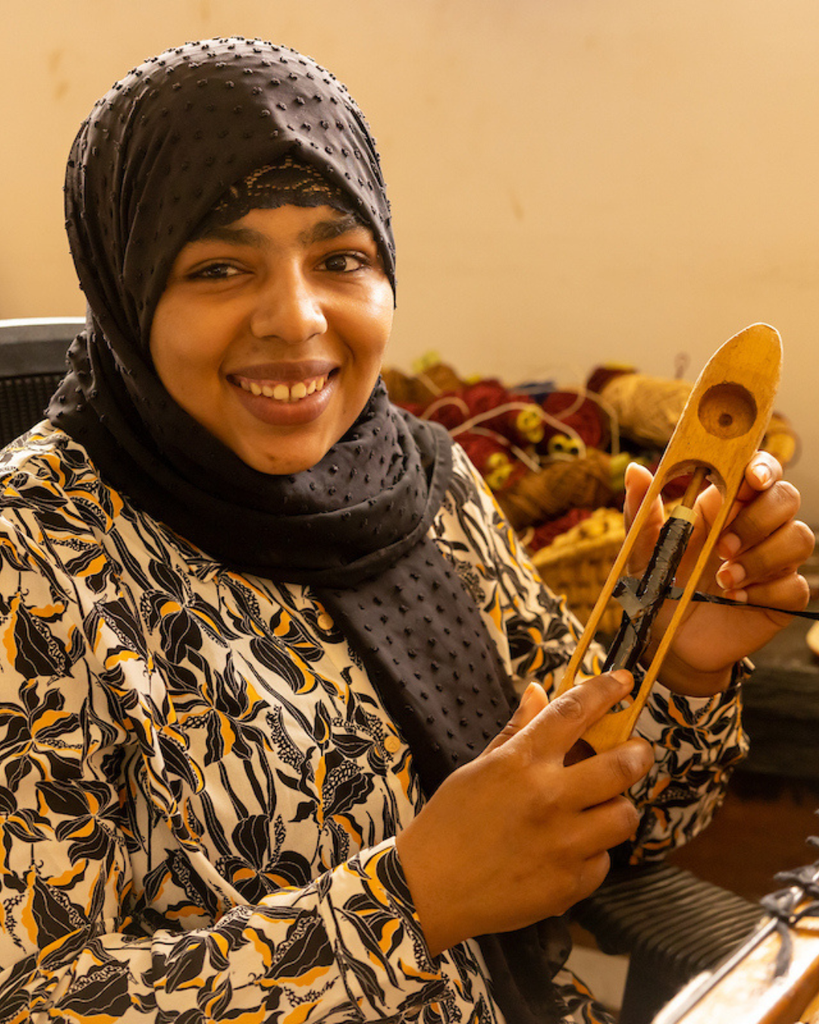
One graduate from an earlier cohort welcomed the board into her home, introduced them to the goats and chickens INSAF had supported her to acquire, and cooked a meal for the group. Other graduates from that same cohort now each manage five beehives — not enough, on their own, to produce honey at real scale, which is the point: the design pushes participants to form cooperatives and work together to make the model viable.
A current participant spoke with the board about losing her parents and brother in the earthquake, and about how INSAF’s counselling sessions helped her rebuild her confidence in the time since. It was one of several conversations that made clear why the psychosocial element of INSAF’s programme isn’t a side note to the practical training — for many of the women there, it’s the part that made everything else possible.
Association Solidarité Féminine: A Three-Year Commitment, and a 100% Reconciliation Rate
In Casablanca, the board’s visit to ASF began with a briefing on the organisation’s structure before meeting participants and touring the facilities. ASF supports single mothers who are pregnant or have recently given birth, are over 18, and have been rejected by their families. Women reach the organisation through its listening office, which assesses each situation individually before enrolling someone in ASF’s three-year programme or referring her elsewhere.
That programme combines housing and support, vocational training — including through ASF’s own restaurants and delivery service — and psychosocial counselling. ASF currently generates 40% of its income through its own commercial activity, with the remaining 60% coming from donors. Over the life of the three-year programme, the organisation reports a 100% family reconciliation rate.
ASF is led by three directors, each paired with a specialist board member, and many of its staff have stayed with the organisation for years — a sign, among other things, of how deeply the team believes in the model. When the board told ASF’s staff of its intention to invite the organisation to apply for a three-year grant, several of them were moved to tears. It’s a reminder of why multi-year funding matters so much here: ASF’s commitment to each woman it enrols runs a full three years, and year-to-year funding uncertainty makes that commitment hard to plan around.
Al Ikram: What Six Months of Flexible Funding Can Build
The board’s final stop was Al Ikram, six months after the organisation received a grant from BB Energy Foundation. The board was invited to inaugurate a new kitchen that will train women in pastry making as part of Al Ikram’s She Jobs initiative — an occasion arranged by the organisation’s director, Nada.
Al Ikram’s recycling workshop turns bottle caps into baskets and other products. Its current workshop lead started there as an apprentice and has since built new equipment, including a machine that produces fine plastic filaments. Three electric cargo bikes now collect recyclable waste from households and businesses across the city. Nada has also launched Koun, a social enterprise that turns recycled material into bags and accessories, and is now looking for international buyers for its newest collection.
The board also visited Al Ikram’s on-site crèche, where children of programme participants are cared for during training hours, making the programme possible for young mothers who would otherwise have nowhere to leave a child. The children had prepared songs to greet the board — a small, unplanned moment that stayed with everyone who was there.
Elsewhere, Al Ikram has begun providing psychosocial counselling to girls under 18 at a nearby detention centre, under a contract secured this year. It’s a direct result of the flexible, unrestricted nature of BB Energy Foundation’s funding — the kind of responsive, needs-driven work that a grant tied to a fixed project could never have enabled.
What Stayed With Us
Across all four visits, a few things kept coming up. Staff who had stayed with these organisations for years. A habit — in the sign-language cafés, the beehive cooperatives, the recycling workshop’s homemade machinery — of building new ideas directly on top of what already works, rather than waiting for outside expertise to arrive. And, in every conversation with participants, a clear sense of dignity, resilience, and ambition that no funding report fully captures.
The visit also reinforced a shift already underway in how BB Energy Foundation works with partners: moving toward longer, multi-year commitments rather than funding one year at a time. Programmes like these — a three-year commitment to a single mother, a beekeeping cooperative built to take years to mature, a training curriculum still being refined — need that kind of runway. Seeing the work in person made that case more clearly than any report could.
We look forward to the next Morocco visit!
You might also like...
Case Studies
Four Partners, One Visit: BB Energy Foundation in Morocco
Read more
August 26, 2026
Article
Why BB Energy Foundation Focuses on Education, Health, and Wellbeing for Women & Children
At BB Energy Foundation, we focus on education, health, and wellbeing because lasting change starts there. Together, these interconnected pillars help build stronger, more resilient, and equitable communities. Read more about the thinking behind our approach.
Read more
May 14, 2026
Case Studies
Interview With Our Partner: INARA
Learn about what is happening in Lebanon right now, and how our partner INARA is helping.
Read more
May 13, 2026